How to read a new Olympus game in 20 spins

 Guide
GuideTwenty spins is not a measurement. It's not enough to say anything sensible about RTP, and it's not enough to determine whether a game is generous or tight. It's roughly like standing at a bus stop for five minutes and drawing conclusions about the city's entire traffic plan. You can see whether any buses come at all, which direction they're going, and whether the signage makes sense, but you haven't measured rush hour.
Still, we often use the first twenty demo spins as an editorial tool when assessing a new Olympus game. Not to chase a result, but to map the engine: do symbols pay on lines, in clusters or anywhere; do new symbols drop down after a win; are multipliers in the base game or only in free spins; and how much of the screen is actually without payment from spin to spin. Here I go through the method, as we use it, with the sessions where we actually had the game open on the screen.
01First step: read the screen before you read the result
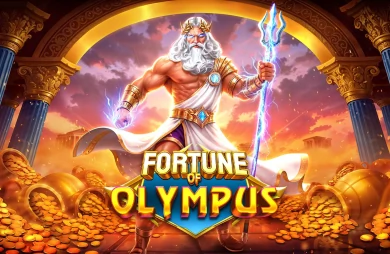
The first round doesn't start with the spin button. It starts with looking at the screen while the game is still. The number of reels and rows often tells you more than the first win does. In King of Olympus from Playtech-Origins it was already clear on the base screen that we had a 6x5 grid in front of us, and that the scatter requirement was fixed at 8+ at the bottom. In Fortune of Olympus from Pragmatic Play the engine sat on a 7x7 grid, where symbols according to our session pay in blocks of at least five contiguous symbols horizontally or vertically. In Zeus Legends of Olympus from Inspired Gaming the picture was the opposite: five reels, three rows and line wins, with the jackpot ladder above the reels and three feature pots just below it.
This is where you separate decoration from mechanics. A Zeus figure beside the reels is not a function. A fixed text about scatter requirements, a jackpot ladder, a Buy Feature button, a counter for free spins or a field with Total Multiplier, on the other hand, are things that can be read technically. In Glory of Olympus: Unlocked from gametimetec, BUY FREE SPINS was fixed on the left side at bet USD 0,50, and in the same game the left side later showed the concrete cluster payouts. In Olympus Mania: Hot Bonus from Fugaso the jackpot ladder was fixed above the reels with GRAND 2000,00, MAJOR 50,00, MINOR 20,00 and MINI 10,00 at DEMO BET 1,00 €. Even before a bonus is triggered, you therefore know that the game works with cash symbols and fixed jackpot tiers.
In the first two or three spins we therefore don't primarily note the amounts, but the building blocks. Are there line numbers, like in Olympus Glory Gods & Kings Link, where the game marked LINE 20 Q x4 = 7,50 EGT? Is there cluster text, as in King of Olympus, where eight rings paid 2,50 EUR? Is there a side panel that sums several small symbol groups, as in Glory of Olympus: Unlocked, where the list showed 10 symboler = 1,00, 10 = 0,25, 8 = 0,38 and 8 = 0,20? That kind of information is far more stable than a single win. It tells you something about how the game calculates, not just how one round turned out.
The practical format is simple: write down stake, grid type, payout requirements and visible counters before you assess the rhythm. If the paytable can be opened without leaving the demo, we check it early. In Treasures of Olympus 1000 the table opened with the i-button at the top right, and at a 1 USD stake we could read that the red crown symbol paid 50 for 12-30 symbols, 25 for 10-11 and 10 for 8-9. In Olympus Glory Gods & Kings Link, however, the paytable did not open in the demo. So the conclusion stops there: we can report the coin values and line wins we saw, but not pretend to know the full paytable from that session.
02Next step: find the payment pattern in the small payouts
When the first spins have run, we look for repetitions in the small wins. Not because the small wins are important in themselves, but because they reveal whether the game pays as a net, a line or a pile. Treasures of Olympus 1000 is a clear example. In our portrait session on 12. august 2026 at 1 USD per spin, symbols paid anywhere on the screen and the winning symbols exploded so that new symbols cascaded down. Ten base spins produced several cascade wins: 1,00 USD, 1,40 USD, 0,90 USD and 0,25 USD. The amounts are small, but the pattern is readable: the game does not wait for a fixed line, it counts clusters on the screen and lets the round continue when something breaks.
King of Olympus shows another variant of the same editorial exercise. Here we noted that eight or more matching symbols anywhere on the reels result in a win, after which the symbols explode and new ones fall down. A cluster of eight rings paid 2,50 EUR, but the total base round ended at 0,78 EUR at Total Bet 5,00 EUR. It looks odd at first glance if you only compare the two numbers side by side, but in practice this is because the game's display of partial payouts and total round value is not always presented the way you expect from an older line slot. Therefore it's better to note what the game itself shows in the win box than to try to work everything backwards from the balance on the fly.
Line play is read differently. In Zeus Legends of Olympus the best documented base round was WIN 7,00 at STAKE 1,00, and the game displayed LINE 9 PAYS: 1,00 for one of the winning lines. Another round paid 0,10. Here the signal is not cascades or symbol-breaks, but fixed lines and a classic settlement where individual lines can be highlighted on the screen. Olympus Glory Gods & Kings Link from EGT Digital behaved the same way in the documented base game: 25 fixed lines, a marked line 20 and four green Q symbols for 7,50 EGT at stake 12,50. That doesn't say how often the bonus part appears, but it indicates that the regular round settles in a calm, line-based tempo.
After ten spins you usually have enough to roughly place the payout pattern. It can be Pay Anywhere and cascades like in Treasures of Olympus 1000, cluster and collapse like in King of Olympus, or fixed paylines like in Zeus Legends of Olympus and Olympus Glory Gods & Kings Link. If none of that is visible, that's also an observation. A game can hide its real engine behind the bonus part, and the text must reflect that. Twenty spins entitle you to describe what you've seen, but not to fill in the gaps the screen leaves.
03Third step: see where the multipliers actually live
Olympus games often use multipliers as if they were weather: they can hang in the air all the time, but they don't necessarily fall into the base game. So the third step is to distinguish between three placements. The first is the visible base-game multiplier. Fortune of Olympus showed it clearly in our demo at 2,00 USD per spin, where a 25x ball landed in the base game and lifted the round to WIN 35,00 USD. Here you don't need to wait for free spins to conclude that multiplier balls can occur in the base game. The catalogue also lists Multiplier and Random multiplier for Fortune of Olympus, but it's the screen session that makes the placement concrete.
The other spot is the bonus round, where the multiplier is saved and grows. Glory of Olympus Xmas from gametimetec is a pure example from our material. At a stake of USD 0,50 buying the free spins cost 50,00, and the purchase gave 10 free spins. In the round Total Multiplier was initially 4X, later 6X, 11X and finally 15X, while multiplier symbols like 2x and 4x dropped in and were added. Royalty of Olympus Xmas from Barbara-Bang had the same basic idea in our session: free spins cost Buy 100,00 DEMO at a stake of 1,00, the purchase gave 15 free spins, and the multiplier started at x2, was at x9 with three free spins left and ended at x12 on the last spin.
The third placement is the feature menu, where the multiplier may not necessarily be seen in regular play, but is tied to a specific buy or a specific bonus variant. Olympus Power Link from Fugaso showed Running Wins Bonus Game til 65,00 € with multipliers x2, x3 and x5, and Running Wins Super Bonus Game til 130,00 €, where the multipliers rose to x5, x10 and x15. Olympus Mania: Hot Bonus showed Bonus Game til 50,00 € at medium volatility and Super Bonus Game til 150,00 € with a guaranteed multiplier x2 and x3. It is important to phrase this narrowly: we saw the prices and the stated multipliers in the menu; that is not the same as having measured the outcomes of the purchased bonuses.
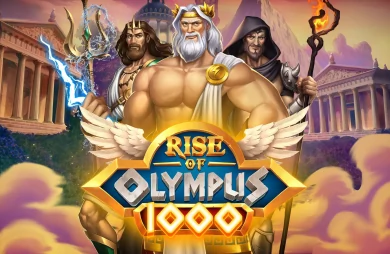
Rise of Olympus 1000 from Play'n GO shows why this split is useful. The game opens with an intro screen that shows multiplier orbs up to x1000 and text about collecting multipliers in free spins. In our demo at BET 1,00 we triggered 12 free spins naturally after about ten spins. During the free spins TOTAL MULTIPLIER read x6 while symbol multipliers of x12 and x2 sat on the grid, and the wins in the round included 0,10, 0,40, 1,00, 3,70, 3,80 and 4,30. Twenty spins therefore didn't tell us whether x1000 is realistic in practice. They showed that the game's multiplier narrative only really unfolds in free spins.
04Fourth step: count the empty rounds without turning them into statistics
One of the most useful questions in a short test is practical: how often does nothing happen on the screen? Not in the sense of statistical hit frequency — twenty spins is far too few for that — but in the sense of rhythm. If a cascading game often produces no wins in the first ten rounds, you feel a different pulse than in a game that regularly pays out small line wins. It's the same difference as between a tap that drips and one that's closed until it suddenly opens fully. Both can deliver water; they just don't feel the same while you're waiting.
In Treasures of Olympus 1000, ten base spins produced several cascade wins, but also enough quiet gaps that the banner HIT TO MULTIPLY CASCADE WIN became part of the experience rather than a guarantee of a payout. In Royalty of Olympus Xmas we noted small base wins such as DROPS WIN 0,20, 1,00 and 0,90, with a combined round of DEMO 1,40 as the best in the base game before buying free spins. In Glory of Olympus: Unlocked the best base round was documented as WIN: 2,03 at a stake of USD 0,50, and the left panel showed several small clusters in the same round. Those kinds of rounds are good for reading the machine, because they show how several small payouts can add up, but they don't say anything certain about how far apart they occur over time.
Hold and Win- og link-spil kræver en anden form for tomhedstælling. I Olympus Glory Gods & Kings Link så vi møntsymboler med værdierne 25,00, 37,50 og 50,00 ved indsats 12,50, men hverken hold-og-vind-runden eller frispillene udløste i de spin, vi nåede. Grundspilsgevinsterne var små, med den bedst dokumenterede linjegevinst på 7,50 EGT ved indsats 12,50. Det er netop den slags session, hvor man skal skrive nøgternt: bonusmotoren er synlig i skærmens opbygning og i katalogets datablade, men den blev ikke aktiveret i vores korte runde. At den ikke kom, er ikke bevis for sjældenhed; det er bare det, der skete.
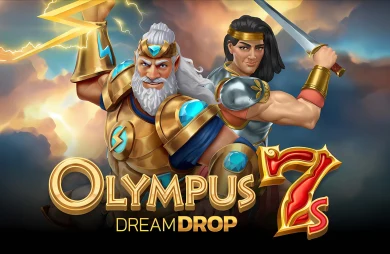
We therefore record dead rounds as observations, not as percentages. After twenty spins one can write that a game in our session gave few small base wins, that the multipliers did not appear outside the bonus, or that the cash symbols landed without triggering the link feature. One cannot state that the game pays often or rarely. That would require a completely different amount of data, and even then the provider's RTP and volatility would still have to be read as the overarching figures. The catalog, for example, lists Olympus 7’s Dream Drop as low volatility with RTP 94 and max win 13000, while King of Olympus has RTP 95,47 and max win 5000, but a short demo session cannot verify those numbers.
05Fifth step: use the buy screen as a rulebook, not as a recommendation
Many Olympus games display a buy button, and it's editorially useful even if you don't intend to use it. The buy screen often indicates where the developer thinks the game's main feature lies. In Fortune of Olympus BUY FEATURE showed two prices at BASE BET 2,00 USD: FREE SPINS for 200,00 USD with standard free spins and SUPER FREE SPINS for 1.000,00 USD with 5x bonus multipliers. When BASE BET was raised to 3,00 USD the prices followed to 300,00 USD and 1.500,00 USD, and at 4,00 USD to 400,00 USD and 2.000,00 USD. This is not advice to buy. It's a rule trace that shows the relationship between stake, feature and multiplier variant.
King of Olympus had a different price structure. At a base bet of 5,00 EUR the Buy Feature cost 375,00 EUR, i.e. 75 times the stake, and triggered 10, 12 or 14 free games. In our purchase we got 10 free games, and the multiplier increased with each cluster, from x3 up to x22 along the way. The payout grew from 1,50 EUR to 24,00 EUR and on to 33,50 EUR, while the win box among other things showed 9 green gems 1,00 EUR, 8 red diamonds 1,50 EUR, 8 blue triangles 0,50 EUR and 11 green gems 2,00 EUR. The important thing here is not that the buy produced a specific win. The important thing is that the buy let us see how the multiplier ladder worked in the free games.
Some buy screens are more limited but still informative. Glory of Olympus: Unlocked cost 50,00 at a stake of USD 0,50, i.e. 100 times the bet, and the free spins round showed a Total Multiplier that rose from 8X with 7 spins left to 17X with 4 spins left. Glory of Olympus Xmas cost the same 50,00 at USD 0,50 and awarded 10 free spins. Royalty of Olympus Xmas had only one purchase: FREE SPINS for Buy 100,00 DEMO at a stake 1,00 DEMO, also 100 times the bet. When three related games show the same price ratio, it's worth noting, but still not proof of identical math. Their catalogue figures are different or incomplete, and the games' details must be read individually.
There are also sessions where buys are only used to confirm the framework. In Zeus Legends of Olympus Bonus Buy showed MYSTERY BONUS for 60,00 and TRIPLE BONUS for 100,00 at a stake of 1,00. We bought the expensive one, and the receipt said that the WIN AND SPIN bonus had been won with DOUBLE COINS, ZEUS BOOST and POT FILL active. The bonus grid had coins with values like 1,50, LIVES LEFT stood at 3, and positions were unlocked at 9, 13, 17 and 21 coins. Again, the conclusion is limited: we saw the bonus grid's structure and unlocking thresholds, not a long-term distribution of outcomes.
06What twenty spins can tell, and what they can't tell
After twenty spins you usually have a usable map of the game's surface. You know whether it most closely resembles a cascade game, a cluster game, a paylines game or a Hold and Win construction. You know whether the screen itself shows symbol payouts, whether multipliers fall in the base game, are stored in free spins or only mentioned in a buy menu. You also have a sense of whether rounds often end completely without counting, or whether small amounts drip in from lines, clusters or coins. That's the method we use to write the first technical description of a new Olympus game before we go deeper into the data sheets.
What you don't have is a measurement of RTP. RTP is a theoretical return measure over a very large number of plays, not something you can read off a handful of demo rounds. Rise of Olympus 1000 is listed in the catalogue with RTP 96,24, high volatility and max win 60000, but our session with 12 naturally triggered free spins proves none of those. Fortune of Olympus is listed with RTP 96,55, high volatility, RTP range and max win 10000, but a 25x-kugle in the base game and a bought free spins run are still only screen observations. Treasures of Olympus 1000 has no RTP listed in the catalogue, and that's what we report. A short test must not be used to guess the missing number.
The catalog lists, for example, Supreme of Olympus from Barbara-Bang with RTP 96, high volatility and max win 15000, Olympus Thunderhold from RTG with RTP 95,74, high volatility and max win 2500, and Olympus Divine Reels from Spinberry with RTP 93,18, while max win is not stated. Such figures come from data sheets, not from our twenty spins. The sessions can illustrate how a game feels on screen, but they cannot replace the data sheet, and they certainly cannot smooth over missing information.
The practical method therefore ends with a double note. First: write down what you see while it happens, including stake, currency, grid, payment method, multiplier placement and bonus requirements. Second: keep that separate from the big numbers. Twenty spins can be enough to understand what kind of machine you're facing. It is not enough to decide whether you should play it, and it is not enough to measure the risk in practice. If you play for real money, the boring framework still applies: games are for people over 18, and a limit should be set before the game is opened, not after the screen has started responding again.
 Slots for the theme